before August was twelve
August and Ona’s Childhood
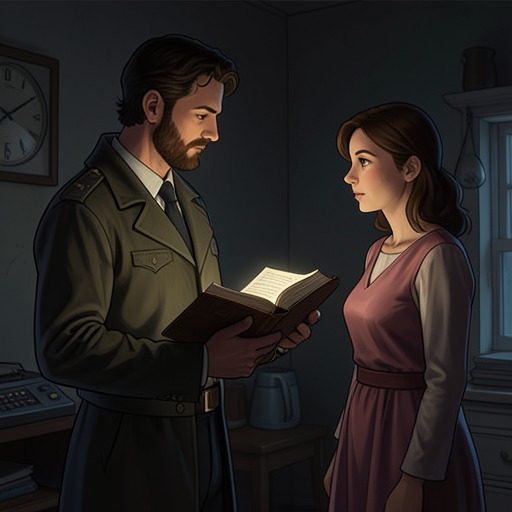
[August Epp](entity:character-recall-character-august-epp-21d7051ad882) and [Ona Friesen](entity:character-recall-character-ona-friesen-ff1e69bed05a) grew up together in [Molotschna Colony](entity:location-recall-location-molotschna-colony-c6ffc1e53c97), playing through the seasons and inventing stories of rebellion, faith, and adventure. Their closeness became the emotional center of August’s memories of home.
August’s childhood in Molotschna
Monica’s Secret Schoolhouse
[Monica Epp](entity:character-recall-character-monica-epp-6ac3fadda231) secretly taught girls during milking, sharing knowledge about their bodies and ideas about a more equal community. [Ona](entity:character-recall-character-ona-483d9a875db1) later carried some of these lessons into the women’s discussions, connecting the present crisis to a concealed history of female education.
when August was twelve
August Leaves Molotschna
[Peters](entity:character-recall-character-peters-73761f52589c) excommunicated August’s parents, and the family left [Molotschna Colony](entity:location-recall-location-molotschna-colony-c6ffc1e53c97) for [England](entity:location-recall-location-england-b153c1f368ea). August believed for years that the exile was punishment for stealing pears and tried to signal his guilt to God by spelling words with stones.
during August’s years in England
The Family’s Separation
August’s father disappeared, while Monica raised him alone and worked at a library. August later learned that his resemblance to [Peters](entity:character-recall-character-peters-73761f52589c), rather than the official accusations against his parents, had made him a symbol of the colony’s shame and unresolved history.
2005
The Assaults Begin
Girls and women in [Molotschna Colony](entity:location-recall-location-molotschna-colony-c6ffc1e53c97) began waking at night bruised, bleeding, and unable to explain what had happened. The community attributed the attacks to demons, divine punishment, adultery, or what [Peters](entity:character-recall-character-peters-73761f52589c) called wild female imagination, leaving the victims without recognition or care.
during August’s university years
August’s London Crisis
In [London](entity:location-recall-location-1bfd335cdd1b), August suffered a nervous breakdown while studying history and became involved with anarchists, artists, and musicians. His political activity brought expulsion from university and imprisonment, deepening the sense that he belonged nowhere.
before August’s imprisonment
The Wandsworth Community
August joined a squatting community near [Gargoyle Wharf](entity:location-recall-location-gargoyle-wharf-68531d2f427e), where people built homes from salvaged materials, held concerts, and tried to live collectively. He befriended a police horse during a protest and named him Frint, an attachment that revealed August’s capacity for tenderness and solidarity.
before August’s arrest
The Hyde Park Protest
August and his companions protested a Criminal Justice Act that restricted raves, gatherings, and repetitive-beat music. When mounted police charged the crowd, August took a frightened, riderless horse to water and eventually brought him back to the community.
after the Hyde Park protest
August’s Imprisonment
August was arrested for stealing the police horse and served time in [Wandsworth Prison](entity:organization-recall-organization-wandsworth-priso-85bc49918526). He was beaten, lost contact with his friends and Frint, and learned that even a small confession of love for ducks could invite violence among his cellmates.
during August’s imprisonment and afterward
Monica’s Death and August’s Despair
While August was in prison, Monica died, and his father was already gone. Isolated and homeless after his release, August considered suicide and spent nights listening to a hymn that he understood as his own funeral.
after August’s release
The Librarian’s Intervention
A librarian found August asleep and distraught in a public library and took him to supper. She challenged his belief that his existence was a perversity, treating doubt and questioning as part of a meaningful faith rather than proof that he should disappear.
after the librarian’s advice
August Returns Home
The librarian urged August to return to Molotschna, seek readmission, and offer to teach. [Peters](entity:character-recall-character-peters-73761f52589c) accepted him on condition that he be baptized and teach English and arithmetic, but August refused to renounce his parents; Peters admitted him anyway.
spring 2008
August’s Return to Molotschna
August returned to Molotschna and began teaching the boys. At first, rumors of the night attacks reached him only as fragments, including a student’s poem imagining that the clothes on the washline were speaking to one another.
2005–2009
The Attacks Are Exposed
The assaults continued at intervals, with victims rendered unconscious by an animal anesthetic made from belladonna. August later estimated that more than three hundred girls and women had been attacked, and the victims gradually recognized that they had been living through the same nightmare.
shortly before the June 2009 meetings
Leisl Captures Gerhard
[Leisl Neustadter](entity:character-recall-character-c35a28cc6e9b) stayed awake until she caught [Gerhard Schellenberg](entity:character-recall-character-gerhard-schellenber-0bf143edcfe5) entering a bedroom with anesthetic spray. She and her daughter subdued him, and he named seven other men involved in the assaults, transforming years of supernatural explanations into a case against human perpetrators.
after Gerhard’s capture
Violence Against the Accused
[Salome Friesen](entity:character-recall-character-salome-friesen-7cc465f95479) attacked the accused men with a scythe after learning that her young daughter [Miep](entity:character-recall-character-miep-58d77f985e79) had been assaulted. Another attacker was hanged by drunken male relatives of victims and died after they passed out, showing how rage and vigilante violence were already taking hold in the colony.
after the attacks are exposed
The Men Are Taken Away
Fearing that the accused men would be killed, [Peters](entity:character-recall-character-peters-73761f52589c) and the elders called the police and sent them to the city for their protection. Most of the colony’s other men followed to raise bail, intending to bring the accused back so the women could be made to forgive them.
June 5, 2009
The Women’s Three-Option Vote
The women voted among doing nothing, staying to fight, or leaving. The result was a deadlock between fighting and leaving, while the women who chose inaction would stay away from the discussions and continue the colony’s essential work.
evening of June 5, 2009
August Is Asked to Record
[Ona](entity:character-recall-character-ona-483d9a875db1) asked August to record the women’s meetings in English. Though the women could not read the resulting document, Ona believed the record mattered; August agreed because he loved her and wanted to be useful to the women.
evening of June 5, 2009
Ona’s Secret Playing Story
[Ona](entity:character-recall-character-ona-483d9a875db1) explained her wish for a record by describing a squirrel and rabbit that seemed to be playing together. She had witnessed something hidden and joyful that did not need a practical justification, an image that framed the women’s effort to imagine another way of living.
morning of June 6, 2009
The June 6 Gathering
The Friesen and Loewen women assembled in [Earnest Thiessen’s farm loft](entity:location-recall-location-earnest-thiessen-35ef6c39afb3), with August taking minutes. They began by washing one another’s feet, while the youngest women, [Autje](entity:character-recall-character-autje-cb945b32a63a) and [Neitje](entity:character-recall-character-neitje-79d70d4aedba), struggled to keep solemn faces and quietly giggled.
early June 6, 2009
Animals and Resistance
[Greta](entity:character-recall-character-greta-5e470c27c752) argued that hunted animals run from danger, while [Salome](entity:character-recall-character-salome-90ac28086fbf) wondered whether they might instead fight. [Agata](entity:character-recall-character-agata-103135b06f69)’s story of a mother raccoon killing a dog to protect her young unsettled the debate: survival might demand flight or resistance, but the women could not settle their own course by analogy alone.
morning of June 6, 2009
The Question of Forgiveness
[Mariche](entity:character-recall-character-mariche-89c3e242d14a) feared that refusing to forgive would cost the women heaven, while [Ona](entity:character-recall-character-ona-483d9a875db1) asked whether coerced forgiveness could be genuine. Ona proposed that violence against children might belong to a category of forgiveness entrusted to God alone, rather than imposed by the bishop or elders.
June 6, 2009
Ona Challenges the Official Story
[Ona](entity:character-recall-character-ona-483d9a875db1) questioned what the women could be expected to forgive when leaders had denied them counseling because they were unconscious during the attacks. She connected ignorance with captivity, asking whether people could truly be free if they were not allowed to know that they were imprisoned.
June 6, 2009
The Debate Over Leaving
The women argued over whether leaving was cowardice or a necessary way to protect their children. [Salome](entity:character-recall-character-salome-90ac28086fbf) insisted that she would rather fight the men, while [Ona](entity:character-recall-character-ona-483d9a875db1) and the Loewens distinguished choosing to leave from fleeing in panic.
June 6, 2009
The Black Sea Metaphor
August offered a fact about the [Black Sea](entity:location-recall-location-black-sea-180ad0f90007)’s oxygenless depths and a hidden river that might sustain life. [Mariche](entity:character-recall-character-mariche-89c3e242d14a) challenged his metaphor, but the women turned it toward questions of resilience, injury, and whether they were the soft tissue of their colony.
June 6, 2009
The Women’s First Manifesto
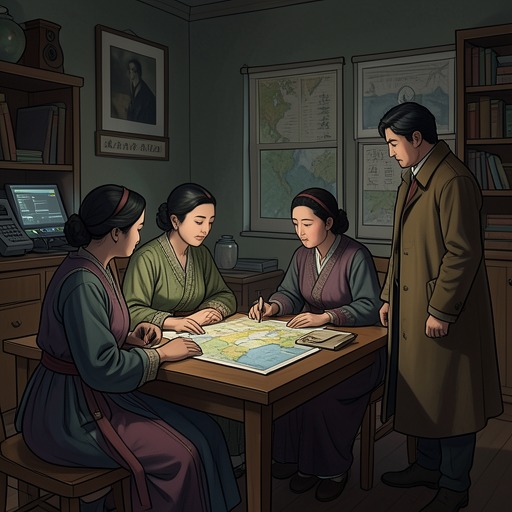
[Ona](entity:character-recall-character-ona-483d9a875db1) sketched a different social order: decisions made collectively, girls taught to read and write, a world map in the schoolhouse, and a faith shaped by love. The proposals echoed Monica’s secret lessons and gave the women an affirmative vision beyond simply defeating the men.
afternoon of June 6, 2009
Pros and Cons of Leaving
The women listed the advantages of leaving, including safety and freedom from forced forgiveness, and the risks, especially uncertainty about where to go. [Autje](entity:character-recall-character-autje-cb945b32a63a) and [Neitje](entity:character-recall-character-neitje-79d70d4aedba) joked, braided their hair together, and asked questions that exposed how little the colony had allowed them to know of the wider world.
afternoon of June 6, 2009
The Men and Boys Question
The women considered whether husbands, brothers, and sons could accompany them. They rejected unrestricted permission for men to join, fearing that they would simply rebuild the old order elsewhere, and began considering a later return only under conditions set by the women.
June 6, 2009
August Defends the Younger Boys
Asked whether boys aged thirteen and fourteen posed a danger, August said they could cause harm but were still children capable of learning. He invoked education through sympathy and love and argued that the boys should be allowed to leave with the women.
June 6, 2009
The World Map Is Promised
The women worried that they had no map and could not navigate beyond familiar settlements. August offered to obtain a map from [Chortiza Colony](entity:location-recall-location-chortiza-colony-0c2287bf59da), while [Ona](entity:character-recall-character-ona-483d9a875db1) argued that the women might make their own map as they traveled.
June 6, 2009
Mejal’s Collapse
As the prospect of making their own map made the unknown feel immediate, [Mejal](entity:character-recall-character-mejal-87a9a93b080c) suffered a rigid, shaking episode. [Salome](entity:character-recall-character-salome-90ac28086fbf) stayed beside her and discreetly shielded her from the others’ prayers; Mejal recovered, returned to the table, and resisted being described as panicked.
June 6, 2009
The Cherry Pit Clue
Nettie brought Julius to the loft after he put a cherry pit in his nostril. [Ona](entity:character-recall-character-ona-483d9a875db1) realized that cherries had just arrived from the city, and the women understood that men had returned to the colony earlier than expected.
June 6, 2009
A Plan to Mislead the Men
The women devised cover stories about quilting and a difficult childbirth in Chortiza to keep the returning men away from the loft. They also worried that the women who had opted to do nothing might reveal their plans, and debated whether lying to protect the group was a sin.
June 6, 2009
Salome’s Defense of Her Child
[Salome](entity:character-recall-character-salome-90ac28086fbf) declared that she would lie, hunt, or kill rather than let another man attack [Miep](entity:character-recall-character-miep-58d77f985e79). Her outburst exposed the conflict between her maternal fury and the women’s commitment to pacifism, while [Agata](entity:character-recall-character-agata-103135b06f69) tried to temper the language without diminishing the danger.
evening of June 6, 2009
The Decision for Pacifism
[Agata](entity:character-recall-character-agata-103135b06f69) argued that staying would place the women in a path toward violence and compromise the pacifism central to their faith. Leaving, she reasoned, would create distance in which they might recover the capacity for forgiveness without having it forced upon them.
June 6, 2009
The Debate Over Authority
[Ona](entity:character-recall-character-ona-483d9a875db1) questioned the authority that had made the colony’s rules, while [Salome](entity:character-recall-character-salome-90ac28086fbf) described the women as commodities rather than members. The discussion linked the assaults to a wider structure in which men controlled women’s work, education, religious interpretation, and bodily safety.
late June 6, 2009
The Three Reasons to Leave
The women settled on three reasons for leaving: their children’s safety, the preservation of their faith, and the right to think. They concluded that their decision did not depend on whether every imprisoned man was guilty, since the colony’s power structure had made the attacks possible.
late June 6, 2009
The Bible Interpreted by Women
The women challenged the rule that wives must submit to husbands, noting that they had learned the Bible’s supposed demands only through men. When [Mejal](entity:character-recall-character-mejal-87a9a93b080c) suggested that God might call their departure a time for love and peace, the women recognized that they were interpreting scripture for themselves.
June 7, 2009
The Boys Under Fifteen
[Agata](entity:character-recall-character-agata-103135b06f69) proposed that boys under fifteen leave with the women, since baptism at fifteen marked full membership and adulthood in the colony. The women agreed to explain the plan rather than force the boys, and to raise their sons with compassion while keeping open the possibility of reunion under the manifesto.
June 7, 2009
The Women Call Themselves Artists
[Ona](entity:character-recall-character-ona-483d9a875db1) compared the uncertain journey to making a painting or taking a photograph: its final shape could not be known in advance. She called the women artists, while [Mariche](entity:character-recall-character-mariche-89c3e242d14a) called them artists of anxiety, and the women joined hands before singing together.
morning of June 7, 2009
The First Songs of Departure
The women sang “[For the Beauty of the Earth](entity:expression-recall-expression-for-the-beauty-of-c328e9fcd4b0)” and then “[Nearer, My God, to Thee](entity:expression-recall-expression-nearer-my-god-to-t-26ff52584dcd),” a hymn August associated with the sinking Titanic. The singing held together their devotion and their awareness that leaving might be perilous, while August struggled with the thought that it could be his last chance to hear [Ona](entity:character-recall-character-ona-483d9a875db1) sing.
night of June 6 and morning of June 7, 2009
Agata Prepares Supplies
After pulling [Klaas](entity:character-recall-character-klaas-d3dac2f7bd2b)’s rotten tooth, [Agata](entity:character-recall-character-agata-103135b06f69) used his buggy to gather food and hid it for the journey. [Autje](entity:character-recall-character-autje-cb945b32a63a) and [Neitje](entity:character-recall-character-neitje-79d70d4aedba) secretly moved [Ruth and Cheryl](entity:character-recall-character-ruth-cheryl-14def62727a7) to [Chortiza Colony](entity:location-recall-location-chortiza-colony-0c2287bf59da) overnight so the horses would not be taken for bail money.
June 7, 2009
Mariche Reveals Klaas’s Violence
[Mariche](entity:character-recall-character-mariche-89c3e242d14a) arrived at the loft bruised, cut, and with her arm in a sling; [Autje](entity:character-recall-character-autje-cb945b32a63a) bore a hand-shaped bruise. Mariche explained that [Klaas](entity:character-recall-character-klaas-d3dac2f7bd2b) had hit them after discovering the horses missing, making the danger of remaining in the colony immediate and personal.
early June 7, 2009
The Departure Decision Is Confirmed
The women confirmed that they would leave rather than stay to fight or do nothing. They agreed that fear and uncertainty did not erase the certainty that their children would remain in danger if they stayed.
June 7, 2009
Leaving Is Not Disobedience
The women considered whether leaving meant disobeying their husbands and concluded that the rules had been imposed through male interpretations of scripture. They accepted that they might feel guilt without being guilty, and that they could feel anger without becoming killers.
June 7, 2009
August Secures the Escape Goods
August revealed that he had taken the co-op safe, dynamite, a world map, and a sextant, and had hidden them with food and other supplies in [Greta](entity:character-recall-character-greta-5e470c27c752)’s buggy. The women did not know how they would open the safe or read the map, but the provisions turned their decision into a material plan.
June 7, 2009
The Northward Route
The women discussed water, grazing land, and the colonies beyond the routes they knew. After [Mejal](entity:character-recall-character-mejal-87a9a93b080c) reported a supposed fire to the north, they suspected the [Koop brothers](entity:character-recall-character-8c45753ac36f) were trying to steer them toward the men in the city and resolved to travel north instead.
June 7, 2009
The Koop Brothers’ Betrayal
[Autje](entity:character-recall-character-autje-cb945b32a63a) and [Neitje](entity:character-recall-character-neitje-79d70d4aedba) admitted that, after drinking mistletoe vodka with the [Koop brothers](entity:character-recall-character-8c45753ac36f), they had told them about the women’s plan. The brothers could potentially reach [Peters](entity:character-recall-character-peters-73761f52589c) by telephone from [Zweibach Hill](entity:location-recall-location-zweibach-hill-535941f26db2), and the women feared that they might block the departure or inform the men.
June 7, 2009
Nettie Chooses a New Name
Nettie reported that the small children were packed and ready, but Cornelius would stay because his mother belonged to the Do Nothing group. Nettie then said she was not ready to leave but would go; [Agata](entity:character-recall-character-agata-103135b06f69) addressed her as Melvin, and she smiled at the recognition of her chosen name.
June 7, 2009
Aaron Goes Missing
Melvin reported that [Salome](entity:character-recall-character-salome-90ac28086fbf)’s son [Aaron](entity:character-recall-character-aaron-3ee24d7d53a3) had failed to come to lunch. Salome insisted he must be tending the horses, then left the loft to find him when Melvin explained that some children had heard him say he did not want to leave with the women.
June 7, 2009
Ona’s Last Words to August
As the women prepared to depart, [Agata](entity:character-recall-character-agata-103135b06f69) asked August whether he would marry [Ona](entity:character-recall-character-ona-483d9a875db1). He said he had long wanted to, and called after Ona that he would always love her; Agata told him that Ona loved him too, and that she loved everyone.
June 7, 2009
The Women Leave Molotschna
The women, children, and supplies gathered behind the schoolhouse and set off in a convoy of buggies, with animals and teams alongside. [Agata](entity:character-recall-character-agata-103135b06f69) asked August to wait for [Salome](entity:character-recall-character-salome-90ac28086fbf) and tell her where the others had gone; August remained behind as the convoy disappeared from sight.
after the women’s departure on June 7, 2009
August’s List of Good Things
Alone in the loft, August made the list [Agata](entity:character-recall-character-agata-103135b06f69) had requested: sun, stars, pails, birth, language, his parents, and other fragments of life. His list connected the women’s departure to his own need to remain in the world and continue teaching.
after the convoy leaves on June 7, 2009
The Koop Brothers Are Drugged
[Autje](entity:character-recall-character-autje-cb945b32a63a) and [Neitje](entity:character-recall-character-neitje-79d70d4aedba) returned to the loft with the [Koop brothers](entity:character-recall-character-8c45753ac36f), who had been made unconscious by [Salome](entity:character-recall-character-salome-90ac28086fbf) using belladonna spray. Salome explained that she had instructed the girls to draw the brothers into the loft and create enough noise for her to enter unseen, preventing them from warning the men.
June 7, 2009
Salome Takes Aaron
[Salome](entity:character-recall-character-salome-90ac28086fbf) revealed that she had found [Aaron](entity:character-recall-character-aaron-3ee24d7d53a3) and used the spray on him because he would not agree to leave. She compared carrying him away to rescuing a sleeping child from a burning house, insisting that he was her child and could not be left behind.
June 7, 2009
August Gives the Minutes to Salome
Before [Salome](entity:character-recall-character-salome-90ac28086fbf) left, August asked her to give the minutes to [Ona](entity:character-recall-character-ona-483d9a875db1) for the unborn child to read someday. Salome pointed out that Ona could not read them, but took the notebooks anyway, allowing the record to travel with the women rather than remain behind as a purely private act.
after the women’s departure on June 7, 2009
August Abandons His Suicide Plan
August had planned to kill himself after the women left, but instead stayed to watch the unconscious [Koop brothers](entity:character-recall-character-8c45753ac36f) and keep them under long enough for the convoy to gain distance. He recognized that his work, his teaching, and his life still had a purpose.
June 7, 2009
August’s Gun and His Father
While the women were already on their way, August regretted not giving them his gun. He remembered that [Ona](entity:character-recall-character-ona-483d9a875db1) had once found him carrying it while suicidal and told him he represented goodness and hope, revealing that his resemblance to [Peters](entity:character-recall-character-peters-73761f52589c) had made him a living reminder of the bishop’s concealed shame.
near the ending
August Chooses to Keep Teaching
August understood that consciousness could be resistance and faith could be action, but he remained uncertain whether his task was to leave or stay. He chose, for now, to teach the boys and to serve as a living reminder that violence did not have to be the final word.
ending
The Women’s Uncertain Road
August could not tell whether the women were heading toward a real fire in the north or whether the danger had been invented to trap them. He watched the sleeping [Koop brothers](entity:character-recall-character-8c45753ac36f) and wondered whether the women were rushing into peril, while accepting that their choice to move toward an unknown future had already changed what was possible.